Why Your Blood Pressure Reads Differently in Each Arm - and When It Matters
Quick Answer: Small differences between arms are common and usually not significant. Clinical guidance is to measure both arms at the first assessment, use whichever arm reads higher for all future readings, and flag a consistent large difference - commonly cited around 15 mmHg or more in systolic pressure - to a clinician, because a persistent gap of that size has been associated with increased cardiovascular risk. Most home users only ever measure one arm, which means a higher-reading arm can go unrecorded for years.
You’ve had a monitor for two years. You’ve always used the left arm because that’s where you put it the first time. Nobody ever told you to check the other one.
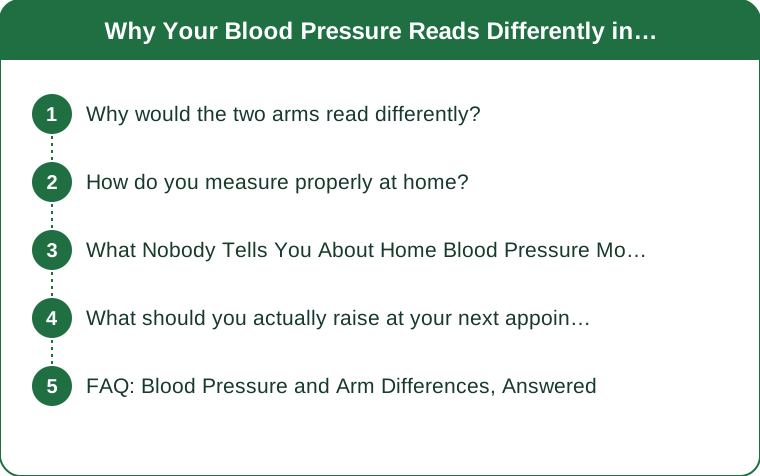
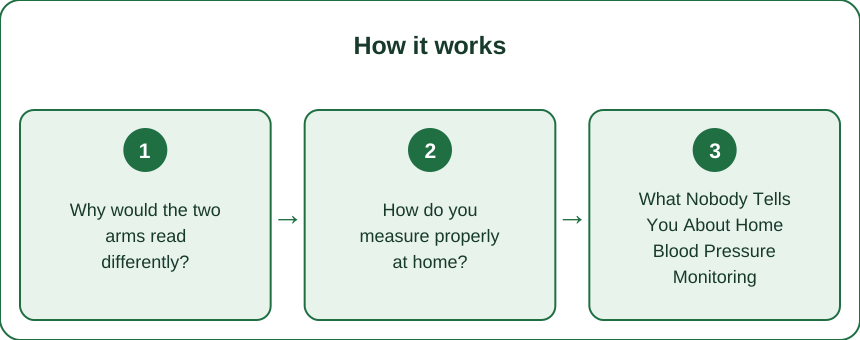
Why would the two arms read differently?
Anatomy differs slightly on each side. The vessels supplying the right and left arms branch from the aorta differently, so a modest difference in reading is expected in many people and isn’t a sign of anything.
Measurement error accounts for a lot of it. Cuff size, arm position, whether the arm is supported, how recently you moved, and even talking during the reading all shift the number - frequently by more than the arm-to-arm difference itself.
Blood pressure varies minute to minute. Two readings taken a minute apart on the same arm can differ noticeably. Comparing arms requires repeated measurements, not one on each side.
A consistent large difference has clinical meaning. Guidance around the commonly cited 15 mmHg systolic threshold exists because a persistent gap of that size may point to differences in the vessels on one side, and has been associated with higher cardiovascular risk in research.
Which is exactly why guidelines say to check both at the start. The point isn’t to worry about a small gap - it’s to identify the higher arm and then use it consistently, so you’re not systematically under-recording your own blood pressure.
And most people never do it. Home monitoring almost always defaults to one arm chosen for convenience, which is why this is one of the more useful small things to raise at an appointment.
How do you measure properly at home?
Sit still for five minutes first, with your back supported and feet flat. Not on the sofa arm, not just after coming in. This is the single biggest source of inflated home readings.
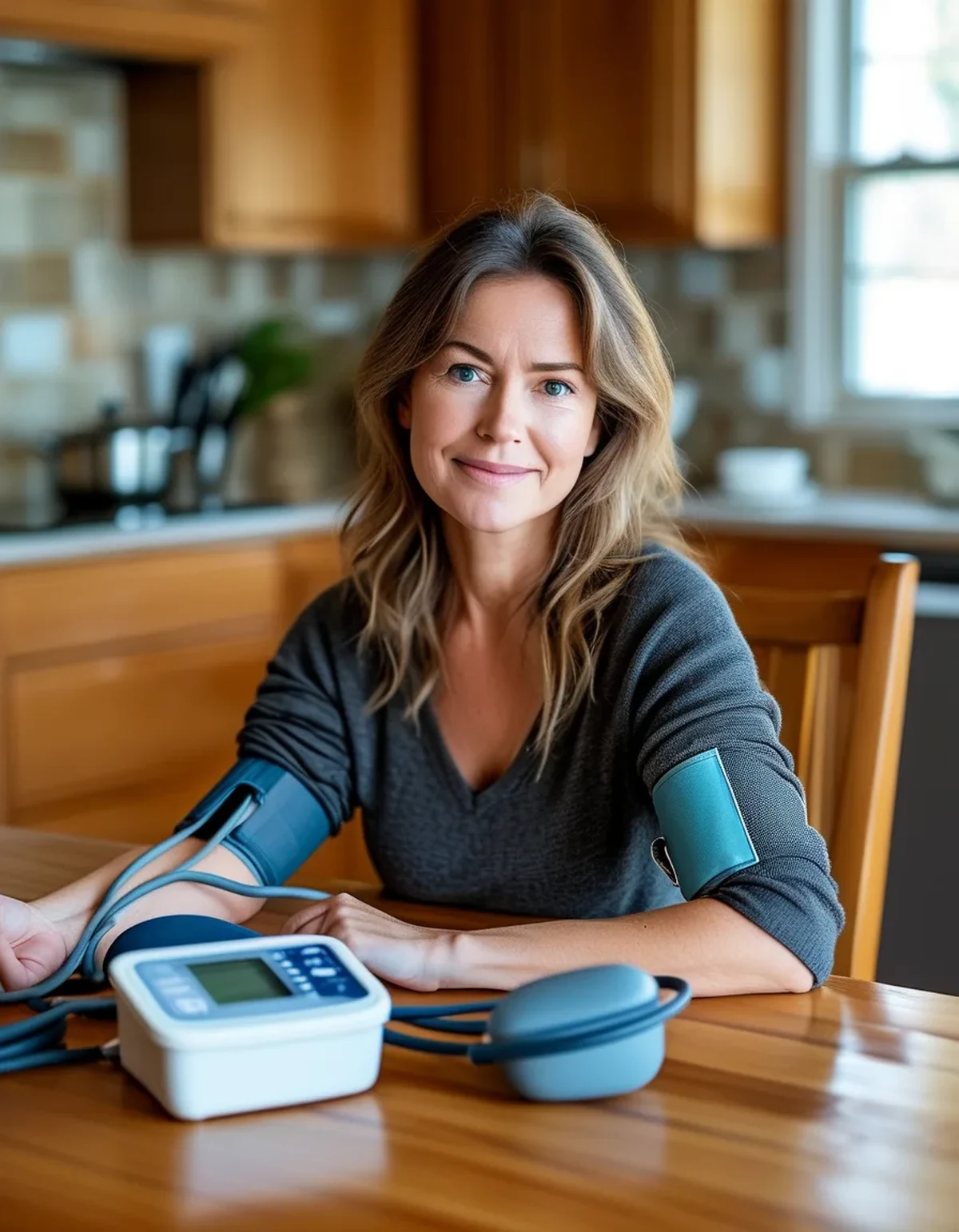
Support your arm at roughly heart height. An unsupported arm held up, or an arm hanging down, both shift the reading measurably. A table is the standard solution.
Use the right cuff size. A cuff that’s too small for your arm reads high - this is a common and significant source of error, and many monitors ship with a cuff that doesn’t fit larger arms.
Don’t talk, and don’t check your phone. Both raise the reading. Sit quietly for the duration.
Take two or three readings a minute apart and record them all. Single readings are noisy. A pattern across readings is what’s actually useful, and the first reading is often the highest.
And test both arms across several sessions, not just once. One reading on each arm tells you very little because of normal variability. Three sessions of both arms gives you something worth reporting.
What Nobody Tells You About Home Blood Pressure Monitoring
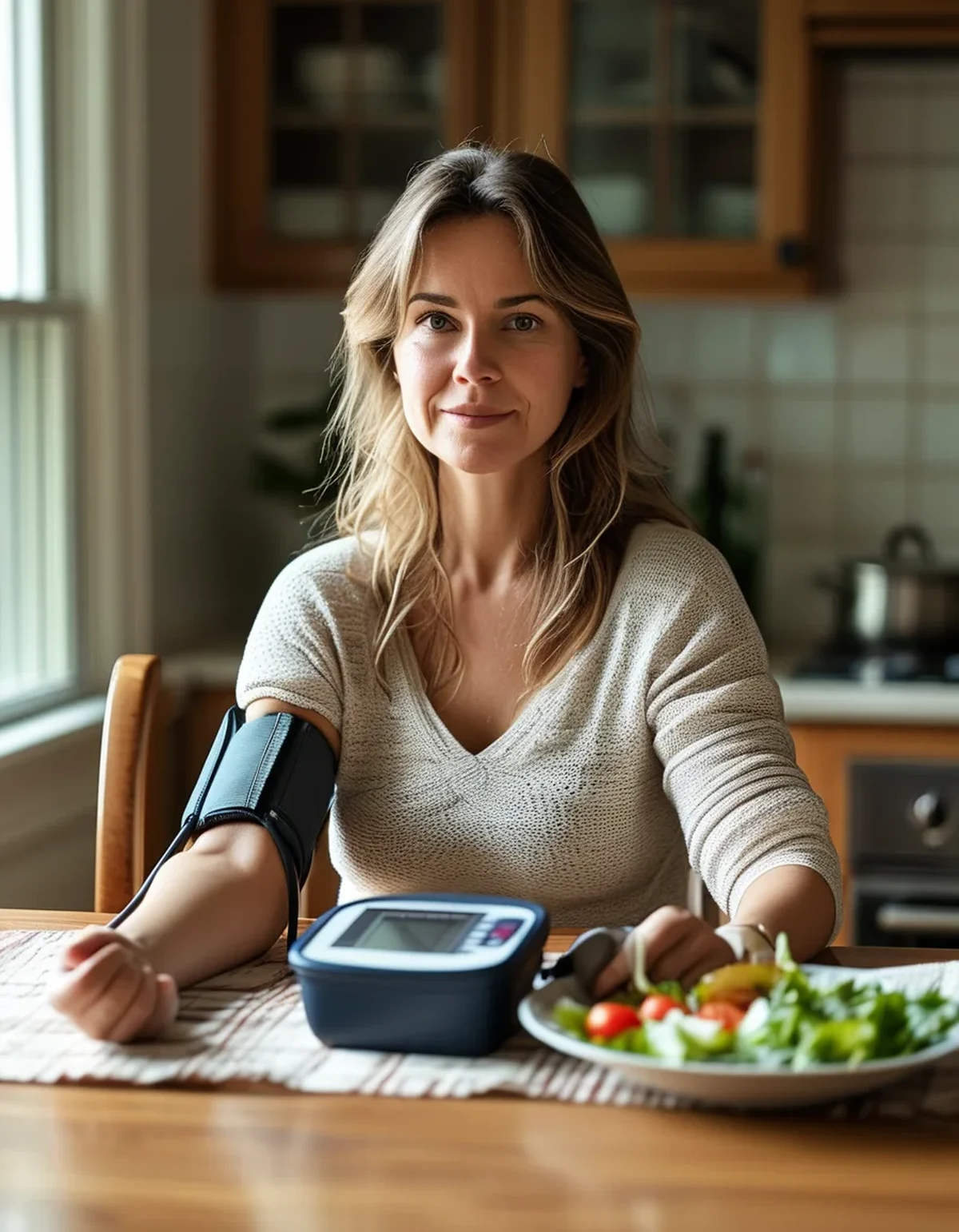
The first reading is frequently the highest. Many people see a noticeably lower second and third reading, which is normal. Recording only the first inflates your average.
Not all home monitors are validated. Devices vary in accuracy, and wrist monitors are generally considered less reliable than upper-arm ones because of positioning sensitivity. An upper-arm monitor from a recognised validated list is the better choice.
Taking it to your appointment is genuinely useful. Bringing your monitor in to be checked against the clinic device, and bringing a week of recorded readings, gives a clinician far more to work with than one reading taken in a stressful room.
White coat effect is real and common. Blood pressure measured in a clinic is frequently higher than at home. That’s exactly why home readings are valued - not as a substitute for clinical care, but as better data.
Timing matters for comparison. Readings taken at the same times each day - typically morning and evening - are comparable. Readings scattered across the day mostly measure what you were doing.
And a single high reading isn’t a diagnosis. Blood pressure is diagnosed on patterns over time, not on one number - which cuts both ways, because a single reassuring reading isn’t proof of anything either.
What should you actually raise at your next appointment?
Ask which arm your readings should be taken in. If both arms have never been compared, this is a reasonable and quick thing to request.
Bring a week of home readings, with dates and times. Written down or in an app. Two readings, morning and evening, over seven days is a far more useful dataset than anything a single appointment produces.
Bring your monitor. Having it checked against the clinic’s takes a minute and tells you whether two years of readings mean anything.
Mention any consistent gap between arms. Specifically if you’ve noticed one arm consistently reading substantially higher across multiple sessions.
Ask what your target should be, given your own history. Targets differ depending on age, other conditions, and medication, and knowing yours makes home readings interpretable rather than just numbers.
And go if you’ve been postponing it. This is general information, not medical advice. Blood pressure is generally symptomless, which is precisely why it’s checked rather than felt - and a very high reading, or symptoms like chest pain, severe headache, visual changes, or breathlessness, warrants urgent medical attention rather than another home reading.
FAQ: Blood Pressure and Arm Differences, Answered
Which arm should I use for blood pressure?
The one that reads higher. Standard guidance is to measure both arms at the first assessment, then use the higher-reading arm consistently for all future readings so you’re not under-recording.
Is a difference between arms normal?
A small difference is common and generally not significant. A consistent difference around 15 mmHg or more in systolic pressure is worth raising with a clinician, as persistent gaps of that size have been associated with increased cardiovascular risk.
Why is my home reading different from the clinic reading?
Clinic readings are frequently higher because of the white coat effect. Home readings taken correctly - seated, rested five minutes, arm supported at heart height, repeated - are often a better reflection of your usual pressure.
How many readings should I take?
Two or three a minute apart, at consistent times, ideally morning and evening across a week. The first reading is often the highest, and single readings are too noisy to interpret.
TL;DR:
- Small arm-to-arm differences are common; a consistent gap around 15 mmHg systolic or more is worth reporting.
- Standard practice is to check both arms once, then always use the higher-reading arm.
- Home technique dominates accuracy: five minutes seated, back supported, feet flat, arm at heart height, correct cuff size, no talking.
- Take two or three readings a minute apart at consistent times, and record them all rather than the best one.
- Bring a week of readings and your monitor to your next appointment - it’s far more useful than one clinic reading.
Blood pressure is symptomless by design. That’s the whole reason it gets measured instead of noticed.
Keep Reading
This article is for general informational purposes only and is not medical advice. Always consult a qualified health professional for guidance specific to you.