What Your Resting Heart Rate Actually Tells You (and When It's Worth a Doctor Visit)
Quick Answer: A normal adult resting heart rate is 60-100 beats per minute, with well-conditioned people often lower (50s). What matters more than the single number is your personal baseline and trend — a sudden jump of 10+ bpm from your normal, sustained over several days, is worth mentioning to a doctor.
Your watch buzzes with a resting heart rate number every morning, but without context, a single number doesn’t tell you much. The useful information is in the pattern, not the daily reading.

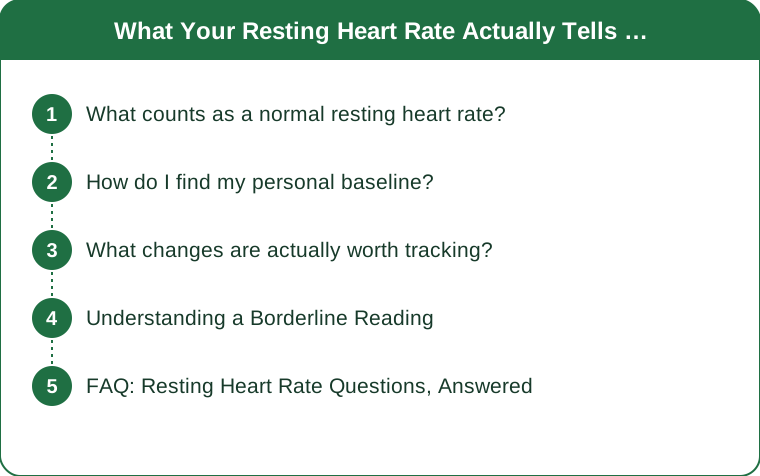
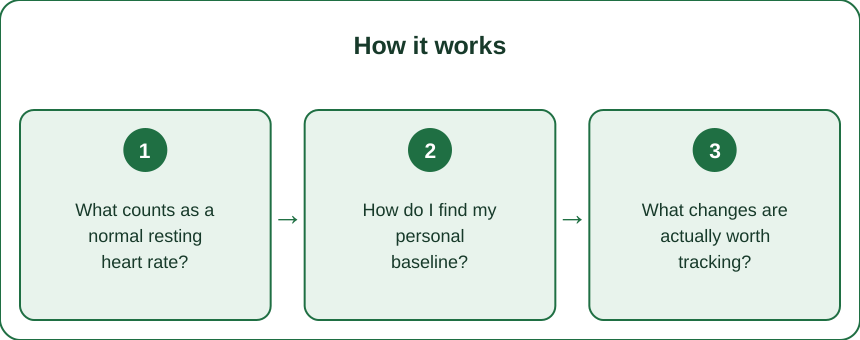
What counts as a normal resting heart rate?
60-100 bpm covers most healthy adults, but that range is wide enough to be almost meaningless on its own. Athletes and very active people often sit in the 50s, which is normal for them, not a warning sign. The number that matters is your typical range, tracked over a few weeks.
How do I find my personal baseline?
Check it first thing in the morning, before coffee, before getting out of bed, for 7-10 days, and average it. That average is your real baseline — far more useful than any single day’s reading, since sleep, stress, and hydration all shift the number day to day.

What changes are actually worth tracking?
A resting heart rate that’s 10+ bpm above your baseline for 3+ days, especially paired with fatigue, is worth noting — it can reflect illness onset, poor sleep, high stress, or overtraining. A single elevated morning after a bad night’s sleep is not, on its own, a concern.
Understanding a Borderline Reading
If your reading falls just outside typical range but you feel fine, the right move is tracking, not panicking. Note the date, how you slept, recent caffeine or alcohol, and stress level alongside the number — most borderline readings resolve within a few days once you can see the context around them.
FAQ: Resting Heart Rate Questions, Answered
Does resting heart rate change with age?
Slightly, but less than most people expect — a healthy range stays roughly consistent from your 20s through your 60s barring health changes.
Can stress alone raise resting heart rate?
Yes, noticeably — ongoing stress or poor sleep can add 5-10 bpm to your baseline without any underlying medical issue.
When should a heart rate change prompt an actual doctor visit?
A sustained rise of 10+ bpm over several days, especially with dizziness, chest discomfort, or unusual fatigue, warrants a call — don’t wait it out if those symptoms appear together. This is general information, not medical advice.
TL;DR:
- Normal range is 60-100 bpm, but your personal baseline matters more than the general range
- Track mornings for 7-10 days to find your real baseline
- A sustained 10+ bpm jump for several days is the actual signal worth flagging
- Pair any concerning trend with symptoms before assuming the worst — and call a doctor if both show up together
One number means little. A tracked pattern over two weeks tells you almost everything you actually need to know.
Keep Reading
This article is for general informational purposes only and is not medical advice. Always consult a qualified health professional for guidance specific to you.