What Your Resting Heart Rate Number Is Actually Telling You
A resting heart rate number gets flagged by a smartwatch or checked at a doctor’s visit constantly, but most people have never actually learned what the number means beyond a vague sense that lower is generally better and higher is generally worse.

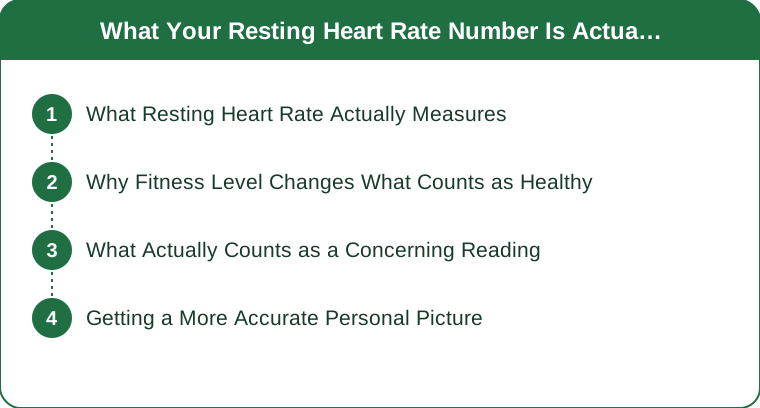
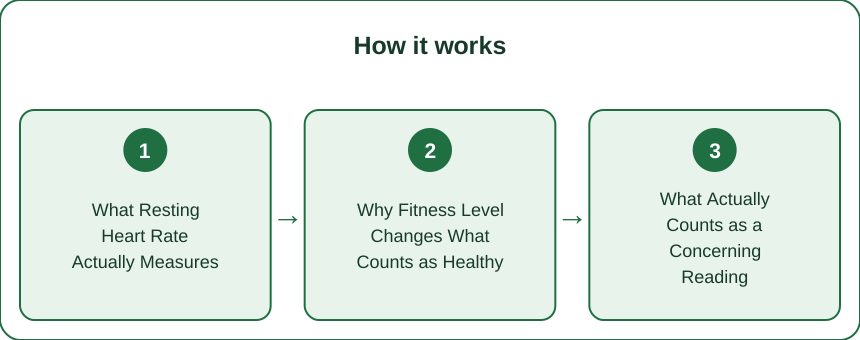
What Resting Heart Rate Actually Measures
The basics: the the-heart-rate-at-full-rest-definition (resting heart rate specifically measuring heartbeats per minute while the body is fully at rest, ideally measured first thing in the morning before getting out of bed for the most accurate reading), the the-general-normal-range-context (a generally accepted normal resting heart rate range for adults falling between roughly 60 and 100 beats per minute, though this range is wide enough to include very different fitness and health profiles within it), the the-single-reading-versus-trend-importance (a single resting heart rate reading mattering considerably less than a personal trend over weeks or months, since day-to-day variation is normal and expected)).
Why Fitness Level Changes What Counts as Healthy
The fitness connection: the the-cardiovascular-efficiency-and-lower-rate (a well-conditioned cardiovascular system generally pumping more blood per heartbeat, meaning it needs fewer beats per minute to circulate the same amount of blood at rest), the the-athletes-often-below-60 (many well-trained endurance athletes having a resting heart rate well below 60, sometimes into the 40s, which would be flagged as unusually low in someone with a different fitness background but is entirely normal for their level of conditioning), the the-improving-fitness-lowers-the-number-over-time (a resting heart rate gradually trending downward over months of consistent cardiovascular training generally reflecting genuine fitness improvement rather than anything concerning).

What Actually Counts as a Concerning Reading
The warning signs: the the-sudden-significant-change-from-personal-baseline (a sudden, significant change from an individual’s own established baseline, rather than the number itself, generally being the more meaningful warning sign to pay attention to), the the-elevated-rate-with-other-symptoms (an elevated resting heart rate accompanied by other symptoms like dizziness, chest discomfort, or unusual fatigue warranting medical attention more urgently than an elevated number in isolation), the the-consistently-outside-normal-range-without-explanation (a resting heart rate consistently outside the general normal range without an identifiable explanation, like a new medication, high stress period, illness, or intense recent training, being worth discussing with a doctor).
Getting a More Accurate Personal Picture
The practical approach: the the-consistent-measurement-conditions (measuring resting heart rate under consistent conditions, like first thing in the morning before caffeine or getting out of bed, to make week-to-week comparisons actually meaningful), the the-track-alongside-sleep-and-stress (tracking resting heart rate alongside sleep quality and stress levels, since both factors can shift the number independently of any change in cardiovascular fitness or health), the the-wearable-device-accuracy-caveat (treating a wearable device’s resting heart rate reading as a useful trend indicator rather than a clinically precise measurement, since accuracy varies somewhat by device and placement), and the frame (a resting heart rate number matters far more as a personal trend than as a single reading, and normal ranges shift considerably with fitness level, so a well-conditioned lower number and a sudden unexplained change from an individual’s own baseline mean very different things despite both potentially falling outside the standard 60-to-100 range.)
A resting heart rate number gets flagged constantly by a smartwatch or checked at a doctor’s visit, but the standard normal range of roughly 60 to 100 beats per minute is wide enough to include very different fitness and health profiles, since a well-conditioned cardiovascular system pumps more blood per heartbeat and simply needs fewer beats per minute to circulate the same volume at rest, which is why many well-trained endurance athletes sit well below 60, sometimes into the 40s, without anything being wrong. A single reading matters considerably less than a personal trend measured under consistent conditions, like first thing in the morning before getting out of bed, and a resting heart rate that gradually trends downward over months of consistent cardiovascular training generally reflects genuine fitness improvement rather than anything concerning. The more meaningful warning sign is a sudden, significant change from an individual’s own established baseline rather than the raw number itself, especially when paired with other symptoms like dizziness, chest discomfort, or unusual fatigue, or a rate that sits consistently outside the normal range without an identifiable explanation like a new medication, a high-stress period, illness, or unusually intense recent training. Tracking the number alongside sleep quality and stress levels, and treating a wearable device’s reading as a useful trend indicator rather than a clinically precise measurement, gives a far more accurate personal picture than judging any single morning’s number against a generic standard range.
Keep Reading
This article is for general informational purposes only and is not medical advice. Always consult a qualified health professional for guidance specific to you.