When to Actually Ask Your Doctor for a Vitamin D Test (It's Not Automatic)
Quick Answer: Vitamin D testing isn’t automatically included in most standard annual bloodwork panels, so it’s generally worth specifically requesting if you have limited sun exposure, live in a northern climate, have persistent fatigue or bone pain, or fall into a higher-risk group (darker skin tone, older age, certain digestive conditions) — otherwise it often gets left out entirely unless you ask.
A lot of people assume vitamin D is checked automatically during their annual physical bloodwork. In most standard panels, it isn’t — which means a genuine deficiency can go undetected for years unless it’s specifically requested.

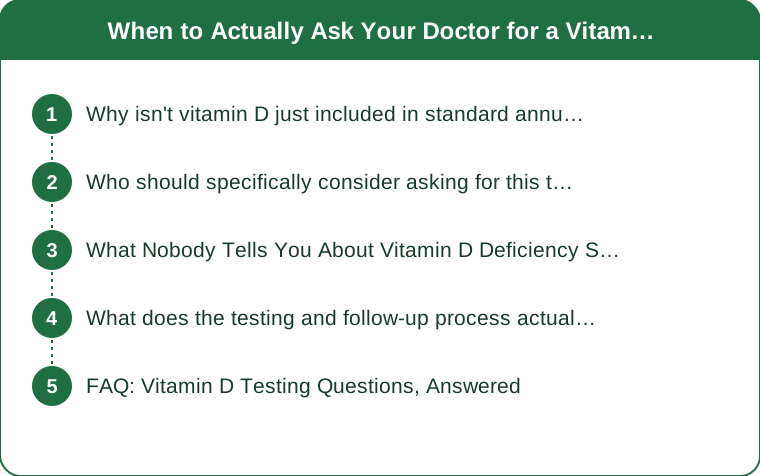
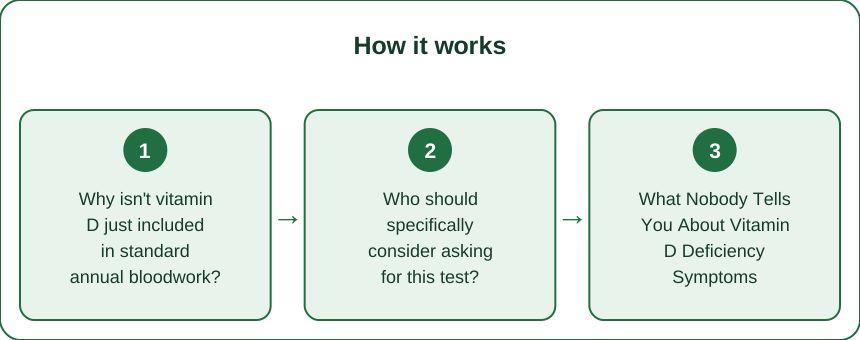
Why isn’t vitamin D just included in standard annual bloodwork?
Standard panels are built around a defined set of markers (cholesterol, blood counts, basic metabolic markers) chosen for broad relevance and cost-effectiveness across the general population, and vitamin D testing typically isn’t included in that default set — it’s usually ordered separately based on specific risk factors or symptoms rather than routinely for everyone.
This isn’t because vitamin D doesn’t matter — it’s largely a cost and standard-protocol issue, which means the responsibility for requesting it often falls on the patient noticing a reason to ask.
Who should specifically consider asking for this test?
People with limited sun exposure (indoor jobs, northern latitudes, consistent sunscreen use), darker skin tones (which produce vitamin D less efficiently from sun exposure), older adults, and anyone with digestive conditions affecting nutrient absorption are all reasonable candidates for proactively requesting a test rather than assuming it’s covered.
Persistent fatigue, unexplained bone or muscle aches, or a known history of low vitamin D are also solid reasons to bring it up at your next appointment specifically.

What Nobody Tells You About Vitamin D Deficiency Symptoms
Vitamin D deficiency symptoms are frequently vague and easily attributed to something else entirely — general fatigue, mild mood changes, and mild muscle aches overlap with dozens of other common causes, which is exactly why it’s easy to go years without connecting the dots to vitamin D specifically without a test confirming it.
Some people with meaningfully low levels report no noticeable symptoms at all, which is part of why proactively asking based on risk factors matters more than waiting for an obvious symptom to prompt the conversation.
What does the testing and follow-up process actually look like?
It’s a straightforward blood test, usually resulted within a few days, and if levels come back low, most providers recommend a supplement dosage tailored to how deficient you are, with a recheck in a few months to confirm levels are moving in the right direction rather than guessing at supplementation without any baseline.
FAQ: Vitamin D Testing Questions, Answered
How much does a vitamin D test typically cost if it’s not covered by insurance?
Costs vary by provider and lab, but it’s generally a moderately priced individual test — worth asking your provider’s office or insurance directly about coverage specifics before assuming it’s expensive.
Can I get enough vitamin D from diet and sun alone without supplementing?
For some people, yes, but many people — especially in northern climates or with limited sun exposure — don’t reliably hit adequate levels from diet and sun alone, which is exactly why testing before assuming either way is useful.
How often should vitamin D be rechecked once levels are normal?
Once levels are confirmed adequate, annual or biannual rechecking (rather than more frequent testing) is a reasonable standard unless risk factors or symptoms change. This is general information, not medical advice.
TL;DR:
- Vitamin D testing usually isn’t part of standard annual bloodwork by default
- Limited sun exposure, darker skin tone, older age, and digestive conditions are reasons to ask
- Symptoms are often vague or entirely absent, so risk factors matter more than waiting for symptoms
- It’s a simple blood test with straightforward supplement follow-up if levels come back low
If you fall into any of the higher-risk categories, don’t assume this one’s already covered — it’s genuinely worth asking for directly. This is general information, not medical advice.
Keep Reading
This article is for general informational purposes only and is not medical advice. Always consult a qualified health professional for guidance specific to you.