Why Bringing an Actual Symptom Timeline to a Doctor's Visit Changes the Whole Conversation
Most people walk into a doctor’s appointment planning to describe their symptoms from memory in the moment, which reliably leaves out details that would have actually mattered — when something started, how it’s changed, what makes it better or worse. A written symptom timeline changes the entire conversation because it gives a doctor pattern information that a verbal recap under time pressure almost never fully captures. Here’s why the difference is so significant, and exactly what to include.

Why a Verbal Recap Under Time Pressure Loses Real Information
The specific gaps: the the-recency-bias-skews-a-verbal-description-toward-the-last-day-or-two-not-the-full-pattern (the memory naturally weighting the most recent days most heavily in an in-the-moment description, understating how a symptom actually progressed over the full period it’s been present — the recency-bias-means-a-verbal-account-often-understates-the-full-timeline-in-favor-of-whats-most-recent), the the-appointment-time-pressure-shortens-the-description-to-whatever-comes-to-mind-first (the the compressed time of a typical appointment pushing toward whatever detail happens to surface first in the moment, rather than the most clinically relevant detail — the time-pressure-favors-whats-top-of-mind-over-whats-actually-most-relevant), the the-a-doctor-has-to-actively-extract-pattern-information-through-follow-up-questions-that-may-not-all-get-asked (the pattern-relevant details like timing, triggers, and progression typically requiring specific follow-up questions to surface, and there’s no guarantee every relevant question gets asked in a limited appointment window — the relying-on-follow-up-questions-to-surface-pattern-details-is-a-less-reliable-method-than-having-them-already-written-down), the the-symptom-severity-and-frequency-are-especially-hard-to-recall-accurately-after-the-fact (the how often or how intensely a symptom occurred over the past weeks being genuinely difficult to estimate accurately from memory alone, especially without having tracked it in the moment — the accurate-frequency-and-severity-recall-is-one-of-the-hardest-things-to-reconstruct-purely-from-memory), the the-a-verbal-account-often-omits-details-that-seem-unrelated-but-are-actually-clinically-relevant (the a person naturally filtering out details that don’t seem obviously connected to the main complaint, sometimes leaving out information a doctor would have found genuinely useful for the differential — the self-filtering-out-seemingly-unrelated-details-can-remove-information-thats-actually-clinically-relevant), and the reframe (the gap between memory and reality being large enough and predictable enough that a written timeline addresses a real, specific limitation, not just a nice-to-have organizational habit).

What a Written Timeline Actually Changes About the Conversation
The concrete shift: the the-a-doctor-can-immediately-see-a-pattern-rather-than-reconstructing-one-through-questions (the a written timeline handing over the pattern information directly, freeing up appointment time that would otherwise go toward extracting that same information through back-and-forth questioning — the handing-over-the-pattern-directly-saves-appointment-time-for-actual-clinical-reasoning-instead-of-information-gathering), the the-specific-dates-and-durations-support-a-more-precise-differential-than-vague-time-references (the exact or close-to-exact dates supporting a much more precise clinical assessment than vague phrases like a while ago or on and off, which leave real ambiguity in a timeline that matters clinically — the precise-dates-support-precise-clinical-reasoning-vague-time-references-dont), the the-a-documented-severity-scale-over-time-shows-trend-direction-clearly (the a simple noted severity level at each timeline entry showing whether a symptom is actually getting better, worse, or staying flat, a trend that’s hard to assess accurately from memory alone — the a-documented-severity-trend-answers-a-question-thats-otherwise-hard-to-answer-reliably-from-memory), the the-noted-triggers-and-relieving-factors-give-a-doctor-actionable-diagnostic-leads-immediately (the specific noted patterns — worse after eating, better with rest — giving direct diagnostic leads that a doctor would otherwise have to specifically ask about and hope get remembered accurately in the moment — the noted-triggers-and-relieving-factors-are-directly-actionable-diagnostic-information), the the-a-written-record-remains-accurate-and-available-even-if-nervousness-during-the-appointment-affects-recall (the the timeline staying reliable and complete even if in-the-moment nerves or forgetting affects verbal recall during the actual appointment itself, per doctor-visit-questions-to-ask-guide’s broader preparation logic — the a-written-record-is-immune-to-in-the-moment-nervousness-affecting-recall), and the frame (the written timeline changing the appointment from information-gathering-then-reasoning into pattern-review-then-reasoning, freeing up real time for the more clinically valuable part of the conversation).
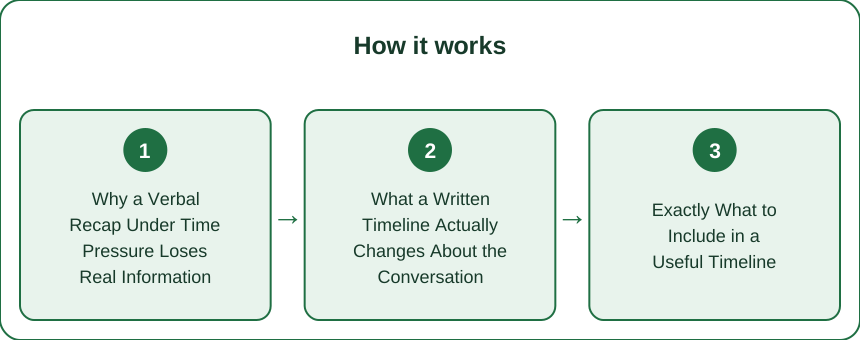
Exactly What to Include in a Useful Timeline
The specific structure: the the-the-exact-or-best-estimated-start-date-of-the-symptom (the recording as precise a start date as can be reasonably recalled, rather than a general phrase, since the exact timeline length itself carries diagnostic weight — the a-specific-start-date-carries-real-diagnostic-information-a-vague-time-reference-doesnt), the the-a-simple-severity-rating-at-regular-intervals-not-just-at-the-worst-moment (the noting a rough severity level — mild, moderate, severe, or a one-to-ten scale — at consistent intervals throughout the timeline rather than only recording the single worst moment, to show the actual trend — the regular-interval-ratings-show-a-trend-a-single-worst-moment-doesnt), the the-specific-noted-triggers-and-what-if-anything-provided-relief (the writing down anything noticed to make the symptom worse or better, even if uncertain about the connection, since a doctor can help sort out what’s actually relevant — the noting-uncertain-triggers-anyway-is-better-than-omitting-them-for-fear-theyre-not-relevant), the the-any-related-symptoms-that-appeared-around-the-same-time-even-if-they-seem-unrelated (the including other changes noticed around the same period, even ones that don’t seem obviously connected to the main complaint, since that judgment is better left to the provider — the including-seemingly-unrelated-symptoms-lets-the-doctor-not-the-patient-decide-whats-relevant), the the-any-self-treatment-already-tried-and-its-actual-effect (the noting any over-the-counter treatment, home remedy, or lifestyle change already attempted and specifically what happened as a result, since that changes what a doctor would try next — the documenting-what-was-already-tried-and-its-actual-result-directly-shapes-the-next-recommended-step), and the frame (the useful structure covering start date, regular severity checkpoints, triggers and relief, related symptoms, and self-treatment attempts — a compact but complete format that takes a few minutes to prepare and reliably improves the actual appointment)).
A symptom description recalled from memory in the moment reliably loses real information — recency bias skews it toward the last day or two, appointment time pressure favors whatever comes to mind first over what’s actually clinically relevant, and details that seem unrelated get self-filtered out even when they matter. A written timeline hands a doctor the pattern directly instead of requiring it be reconstructed through follow-up questions that may not all get asked, freeing up appointment time for actual clinical reasoning rather than information gathering. A useful version covers a specific start date, a severity rating at regular intervals rather than just the worst moment, noted triggers and relief, related symptoms even if they seem unconnected, and anything already tried along with its actual effect — a few minutes of preparation that changes what an appointment can actually accomplish.
Keep Reading
This article is for general informational purposes only and is not medical advice. Always consult a qualified health professional for guidance specific to you.