Why Your Iron Levels Can Look 'Normal' and Still Leave You Exhausted
Quick Answer: A standard iron panel can show ‘normal’ while ferritin — the marker for stored iron — sits in a low-normal range that’s still associated with fatigue, especially in women. Ask your doctor specifically for a ferritin number, not just ‘iron levels,’ if exhaustion persists despite normal labs.
You’ve had bloodwork done, your doctor said everything looks normal, and you’re still dragging through every afternoon. The gap is often one specific number that a basic panel doesn’t always flag as a problem: ferritin, and understanding it changes what you should actually be asking for at your next appointment.

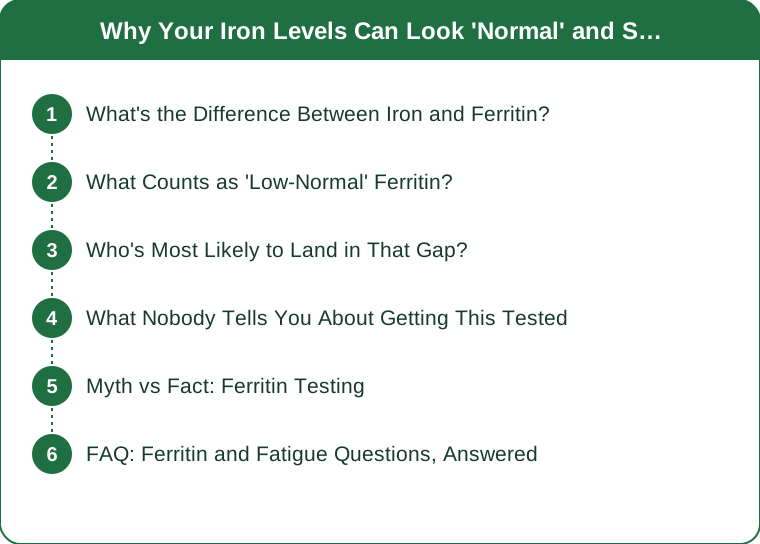
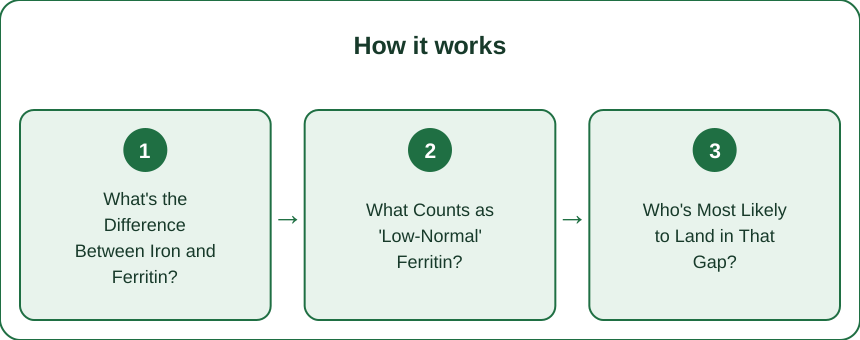
What’s the Difference Between Iron and Ferritin?
Serum iron measures how much iron is circulating in your blood right now, which fluctuates through the day and after meals, meaning a single snapshot doesn’t tell the full story. Ferritin measures your body’s stored iron reserves — think of it as the difference between checking your wallet versus checking your savings account. A person can have normal circulating iron while their storage reserves are quietly running low, which is exactly the combination that produces a ‘normal’ looking panel alongside real, persistent fatigue. This is also why two people can eat identical diets and have very different ferritin trajectories — how much iron gets stored depends on absorption efficiency, menstrual losses, and existing reserve levels, not just intake.
What Counts as ‘Low-Normal’ Ferritin?
Lab reference ranges for ferritin often list the low end around 10-15 ng/mL as the cutoff for ‘normal,’ but multiple studies have found fatigue symptoms improving with iron supplementation in women with ferritin below 30-50 ng/mL, even though those numbers technically fall inside the standard reference range. That gap between ‘lab normal’ and ‘symptom normal’ is exactly where a lot of unexplained fatigue lives, and it’s a gap most routine checkups don’t specifically discuss unless you raise it.
Who’s Most Likely to Land in That Gap?
Menstruating women, especially with heavier or longer periods, are the group most likely to have ferritin quietly drift toward that low-normal range without ever crossing into an official ‘iron deficient’ flag on a standard lab report. Vegetarians and vegans, frequent blood donors, and endurance athletes are also higher-risk groups worth mentioning to a doctor specifically, since each of these groups loses or under-replenishes iron stores through a different mechanism.

What Nobody Tells You About Getting This Tested
A routine annual physical often runs a complete blood count (CBC), which can look entirely normal even with low ferritin, because ferritin isn’t automatically included unless specifically ordered as a separate test. Nobody tells patients they need to ask for it by name — ‘can we check my ferritin level specifically’ is the exact phrase that gets it added to the order, since a general request to ‘check my iron’ sometimes only triggers the standard panel that misses this specific number.
Myth vs Fact: Ferritin Testing
Myth: if your doctor didn’t mention ferritin, it means your levels are definitely fine. Fact: ferritin often simply isn’t part of the standard order unless requested, which is a testing-scope issue, not a confirmation that your levels have been checked and cleared.
Myth: only people with obvious anemia symptoms need a ferritin check. Fact: ferritin can sit low enough to cause fatigue well before a person crosses into full anemia on a standard blood count, which is exactly why someone can feel exhausted with an entirely normal-looking CBC.
FAQ: Ferritin and Fatigue Questions, Answered
What symptoms suggest low ferritin beyond general tiredness?
Common accompanying signs include unusual cravings for ice (a specific symptom called pica), hair thinning, cold hands and feet, and restless legs at night — any of these alongside fatigue is worth mentioning specifically when requesting a ferritin test, since together they paint a more complete picture than fatigue alone.
Can I just start taking an iron supplement without testing first?
No — taking iron without a confirmed low level can cause constipation and, in rare cases involving an underlying condition like hemochromatosis, genuine harm from iron overload. Get the number first, then supplement with actual guidance rather than guessing.
How long does it take for ferritin levels to improve with supplementation?
Most people see measurable improvement in ferritin over 2-3 months of consistent supplementation, with symptom improvement sometimes noticeable a few weeks before the lab number fully normalizes, which is worth knowing so you don’t give up on a supplement too early.
Does diet alone typically fix a low ferritin level, or is a supplement usually necessary?
Diet can help maintain healthy ferritin over time, but correcting an already-low level through food alone is typically slower and less reliable than a targeted supplement, since heme iron from food is absorbed at a fairly limited rate per meal regardless of how much iron-rich food is eaten.
This is general health information, not medical advice — a doctor should interpret your specific results and guide supplementation.
TL;DR:
- Ferritin measures stored iron, not just circulating iron — the two can diverge
- ‘Lab normal’ ferritin (10-15+ ng/mL) can still sit below the range where symptoms clear up (often 30-50 ng/mL)
- Menstruating women, vegetarians, and frequent blood donors are highest risk
- Ferritin isn’t automatically included in a routine panel — ask for it by name
- Never start iron supplements without a confirmed low number first
If your labs say ‘normal’ but your body says otherwise, the ferritin number is one of the most common places that mismatch is actually hiding.
Keep Reading
This article is for general informational purposes only and is not medical advice. Always consult a qualified health professional for guidance specific to you.