How to Prepare for Blood Work So Your Results Are Actually Accurate
Quick Answer: Follow your clinic’s fasting instruction exactly - typically 8 to 12 hours with water freely allowed and encouraged. In the 48 hours before, skip unusually hard workouts and alcohol, stop biotin-containing supplements, and keep meals normal rather than suddenly virtuous. Take regular medications unless told otherwise - and ask, never guess. Book morning draws, hydrate well, and remember one odd number is a flag for a repeat, not a diagnosis.
Blood work feels like a passive event - you show up, you get poked, science happens. But several of the numbers on that panel are snapshots of your last two days, not your life, and people routinely earn themselves a scary phone call and a repeat draw with choices they made the night before. The good news: protecting your results takes about as much effort as packing a gym bag.

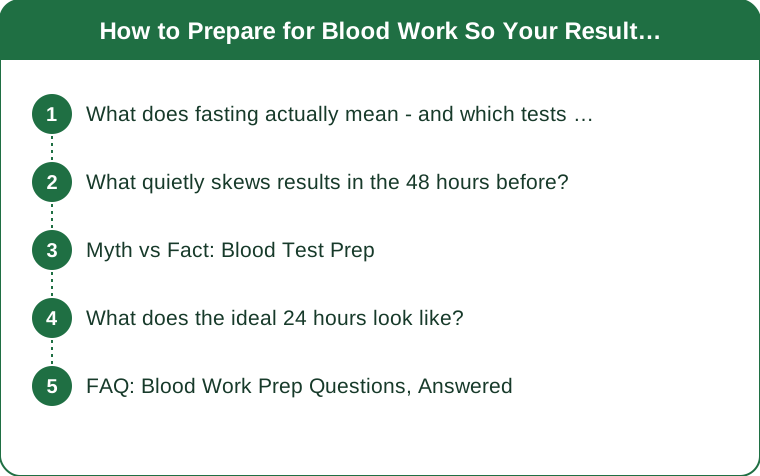
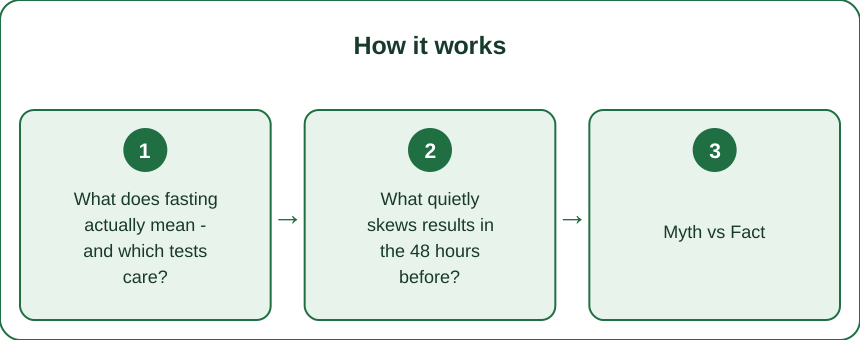
What does fasting actually mean - and which tests care?
Fasting means no calories - not no water. For a typical fasting draw, that is 8 to 12 hours with nothing but water. Water is not just allowed; it is encouraged, because a hydrated vein is an easier draw and dehydration can concentrate some values. The classic mistake is arriving parched because you took fasting to mean nothing by mouth.
Which tests traditionally want it: fasting glucose is the strict one - food obviously moves it. Triglycerides rise substantially after meals, so a lipid panel has traditionally been fasted, though many clinics now accept non-fasting lipids for routine screening because guidance has relaxed. The answer that overrides this entire paragraph: do what your specific order says. If the instruction is unclear, one phone call beats one guess, because guessing wrong can mean rebooking the draw.
Coffee is the eternal question. Black coffee has almost no calories, but it is not nothing - it can nudge some values and it is mildly dehydrating. The safe answer for a fasting draw is water only, coffee the moment the needle is out. Bring the thermos as a reward.
Medications: take them unless explicitly told otherwise. Never self-pause a prescription for a blood test - some tests are specifically meant to measure you on your medication, and stopping certain drugs abruptly is genuinely risky. The exceptions - like thyroid medication timing on the morning of a thyroid test, or supplements - are exactly the things to ask about when booking. This is general information, not medical advice.
What quietly skews results in the 48 hours before?
Several everyday choices move real numbers - enough to trigger flags on a report.
A hard workout. Strenuous exercise, especially unaccustomed strength training, releases muscle enzymes that can elevate values like CK and even liver-associated enzymes such as AST and ALT for a day or more. A crushing leg day on Wednesday can make Friday’s panel look briefly alarming to a doctor who does not know about the leg day. Keep the 48 hours before a draw to easy, familiar movement - walks are fine.
Alcohol. Even a moderate evening can raise triglycerides and nudge glucose and liver markers. Skip it entirely for at least 24 hours before, ideally 48 if lipids or liver values are on the order.
Biotin - the sneakiest one on the list. The B vitamin megadosed in hair, skin, and nail supplements can interfere with the lab technology behind several tests - thyroid panels are the famous example - producing results that read falsely high or falsely low. The values are not wrong about you; the assay is being fooled. Labs commonly suggest stopping biotin for at least a couple of days before testing - tell your clinic what you take and ask how long to pause.
A late, heavy, or unusually salty dinner shortens your true fasting window and can linger in glucose and triglycerides. Eat a normal dinner at a normal hour.
Being sick. An active cold or infection shifts white cells and inflammatory markers, and can distort others like ferritin. For routine monitoring bloods, rebooking a week after recovery usually beats generating a panel full of asterisks.
Cycle timing. Some hormone tests are meaningful only on specific cycle days - if you menstruate and hormones are on the order, confirm which day you should book.

Myth vs Fact: Blood Test Prep
Myth: Being extra healthy the week before gives your doctor better information. Fact: It gives your doctor information about your performance week. A crash-cleanup before a cholesterol test measures the cleanup, and decisions get made on numbers that do not represent your actual life. Live normally, minus the specific 48-hour skews - hard training, alcohol, biotin.
Myth: You cannot drink water before a fasting test. Fact: The opposite. Water keeps your values honest and your veins cooperative. Two glasses in the hour before the draw is the phlebotomist’s favorite thing you can do.
Myth: Black coffee does not count because it has no calories. Fact: It is debated, which is exactly why the safe default is water only until the draw is done. If your clinic explicitly allows black coffee, enjoy; if unstated, wait.
Myth: Vitamins are harmless before blood work. Fact: Most are fine, but biotin can distort thyroid and certain other assays, and a handful of other supplements can nudge specific tests. The rule is disclosure: list everything you take when booking and follow the pause instructions you get.
Myth: One bad number means something is wrong with you. Fact: Single values drift with hydration, timing, stress, sleep, and lab variation. Doctors read trends and clusters, not lone data points - which is why the standard response to one odd result is a repeat, not a diagnosis. Do not spend the weekend interpreting a lone asterisk with a search engine.
What does the ideal 24 hours look like?
A checklist you can copy for the night before and the morning of.
The evening before: normal dinner, normal portion, done by an hour that gives you your required fasting window against your appointment time - a 7pm dinner fits a 8am draw with hours to spare. No alcohol. Take your usual evening medications unless instructed otherwise. Skip the biotin and any paused supplements. Go to bed at a normal hour - a short night elevates stress hormones and can nudge glucose.
The morning of: water when you wake and another glass before you leave. Usual morning medications per your instructions. Wear a top with sleeves that push up easily past the elbow - the practical detail everyone forgets. If you run cold, arrive warm: warm arms have friendlier veins, and a brisk walk from the parking lot genuinely helps.
If needles make you faint or queasy, say so at check-in. This is common, phlebotomists handle it daily, and lying down for the draw prevents most fainting outright. Look away, breathe slowly, and have your post-draw snack in your bag - eating right after breaks the fast and steadies you before you drive.
Book mornings when you can. Fasting overnight is vastly easier than fasting through a workday, and some values shift through the day - morning draws also make your results more comparable to your previous morning draws, which is what trend-reading depends on.
And close the loop. Before you leave, ask how and when results arrive and who will explain them. A portal full of unexplained numbers on a Friday night is nobody’s favorite reading - knowing the follow-up plan is part of the preparation too.
FAQ: Blood Work Prep Questions, Answered
Can I drink water before a blood test?
Yes - freely, even for fasting tests. Hydration keeps values like concentration-sensitive markers honest and makes the draw easier. Arriving thirsty is the most common self-inflicted error.
Can I work out the day before blood work?
Keep it light and familiar. Hard or novel training can elevate muscle enzymes and even liver-associated values for a day or more, which can earn you a repeat draw. Walks and easy sessions are fine.
Do I need to stop supplements before a blood test?
Ask - and specifically mention anything with biotin, which can interfere with thyroid and certain other assays. Clinics commonly advise pausing it for a couple of days pre-draw. Never pause prescription medication without instruction.
Why did my doctor want to repeat a blood test?
Usually because one value sat outside range and single results are noisy - hydration, timing, recent exercise, illness, and lab variation all move numbers. A repeat that comes back normal ends the story; a repeat that matches becomes real information.
TL;DR:
- Fasting means no calories, water encouraged - and your clinic’s specific instruction outranks every general rule.
- The 48-hour skew list: hard workouts, alcohol, biotin supplements, heavy late dinners, and testing while sick.
- Live normally before a test - a performance week produces numbers about the performance, not about you.
- Morning draws, rolled-up sleeves, a post-draw snack, and a known follow-up plan complete the job.
The needle takes eight seconds. The accuracy was decided in the two days before it - and now that part is under your control.
Keep Reading
This article is for general informational purposes only and is not medical advice. Always consult a qualified health professional for guidance specific to you.