The 4 Things Worth Bringing to Your Annual Physical (That Nobody Tells You)
Quick Answer: Bring a written symptom timeline, your current medication and supplement list, last year’s lab numbers if available, and a short written question list — all four together turn a rushed 15-minute appointment into one that actually addresses what’s been going on.
You walk out of most annual physicals having forgotten to mention the thing that’s actually been bothering you for months. That’s not a memory problem — it’s a preparation problem, and it has a specific, fixable fix.

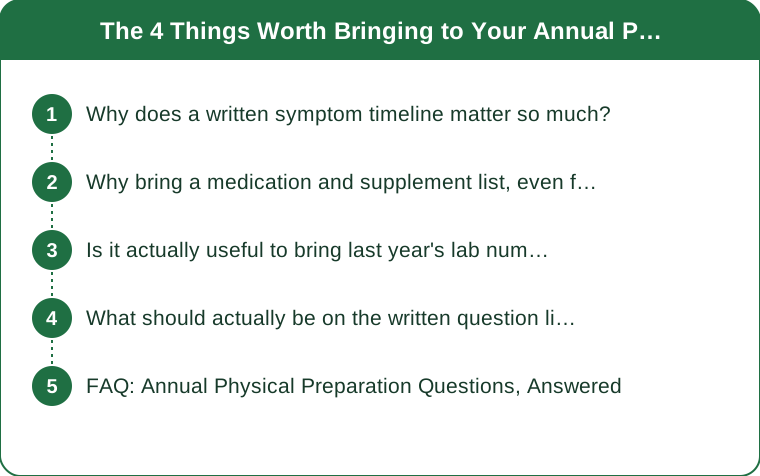
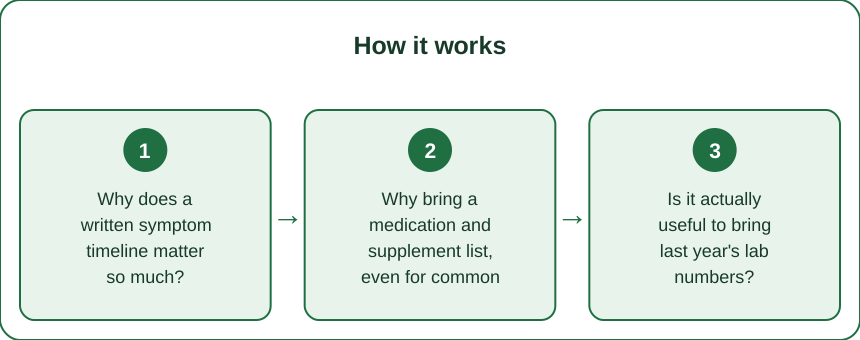
Why does a written symptom timeline matter so much?
In the moment, a doctor asking “any concerns?” tends to surface only what’s top of mind that day — not the fatigue that’s been building for three months or the joint stiffness that comes and goes. A written timeline (even three bullet points: what, when it started, how often) turns a vague memory into something a doctor can actually act on.
Without it, easy-to-forget but potentially important patterns — symptoms that cluster around a cycle, or that got worse after a specific change — often never make it into the conversation at all.
Why bring a medication and supplement list, even for common ones?
Doctors need the full picture to catch interactions or rule out causes, but most people underreport supplements specifically, assuming they don’t count since they’re “just vitamins.” A magnesium supplement or a daily allergy pill can both be relevant to symptoms or lab results, and a written list catches what a rushed verbal answer misses.

Is it actually useful to bring last year’s lab numbers?
Yes, when possible — a single lab value in isolation tells a doctor less than a trend does. A cholesterol number that’s technically “normal” but has climbed steadily for three years tells a different story than the same number appearing for the first time, and most patient portals let you screenshot or print last year’s results in under a minute.
What should actually be on the written question list?
Prioritize 2-3 real questions over a long list nobody has time to get through — appointments run short, and a focused list means the important ones don’t get cut for time. Put your most important question first, since it’s the one most likely to actually get answered if time runs out.
FAQ: Annual Physical Preparation Questions, Answered
How far in advance should I start the symptom timeline?
Start it as soon as you notice something recurring — even a rough note in your phone the day it happens is more accurate than trying to reconstruct it the night before your appointment.
Should I bring a list even if I feel totally fine?
Yes — a baseline list of current medications, supplements, and any minor recurring symptoms is useful even in a routine, symptom-free physical, since it still shapes what gets checked.
What if I don’t have access to last year’s lab results?
Most patient portals keep historical results available; if you don’t have portal access, the office can usually pull them internally without you needing to bring anything.
TL;DR:
- A written symptom timeline surfaces patterns a verbal answer in the moment misses
- List all medications and supplements, even ones that feel too minor to mention
- Bring last year’s lab numbers when possible — trends matter more than single values
- Keep the question list to 2-3 items, most important one first
This is general information, not medical advice — bring these four things and let your doctor guide the rest.
Keep Reading
This article is for general informational purposes only and is not medical advice. Always consult a qualified health professional for guidance specific to you.