The Annual Physical, Optimized: Getting Real Value From Your Twenty Minutes
The annual physical averages twenty minutes — and most of us spend it improvising answers about our own bodies. The optimization guide: the one-page prep that doubles the visit’s value, the questions that actually get answered and the follow-up system that closes loops.

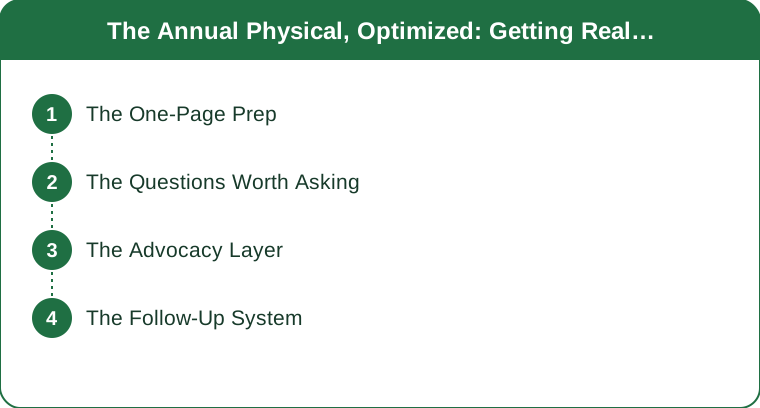
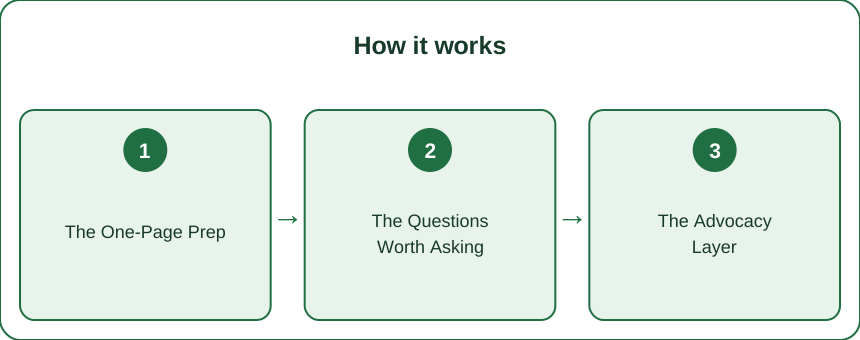
The One-Page Prep
The document that changes the appointment: the symptom-and-question list (the three-to-five things you’ve been meaning to mention, written down — the exam-room amnesia is universal; the list is the cure), the medication-and-supplement census (everything, including the ashwagandha and the magnesium — supplements interact and doctors can’t factor what they don’t know), the family-history refresher (the updates since last year — the aunt’s diagnosis changes your screening math), and the numbers memory (your last blood pressure, the weight trend, the wearable’s resting-heart-rate drift — the know-your-numbers homework arriving as data, not vibes).
The Questions Worth Asking
The twenty-minute agenda: the screening-schedule audit (‘what am I due for this year, given my age and history?’ — the question that catches the overdue mammogram and the never-discussed bone-density baseline), the symptom-pattern presentation (the prepared version: ‘morning stiffness, both hands, three months, better by noon’ beats ‘I’ve been achy’ — the symptom diary’s one-line summaries get real answers), the results-explanation right (‘what does this number mean for ME, and what would change it?’ — the lab report deserves translation), and the priority honesty (lead with the scariest question, not the safest — the doorknob confession at minute nineteen gets sixty seconds; the same question at minute two gets ten minutes).

The Advocacy Layer
Getting taken seriously: the persistence scripts (‘this is significantly affecting my daily life’ and ‘what else could explain this?’ are the sentences that reopen dismissed symptoms — the fatigue-and-pain complaints that deserve workups sometimes need the second ask), the documentation power (the symptom log with dates outranks recollection — patterns on paper get tests ordered), the second-opinion normalcy (it’s routine, not rude — doctors get them too), and the fit honesty (a doctor who consistently dismisses is replaceable — the relationship is a hire, and you’re the employer).
The Follow-Up System
Closing the loops: the results rule (no news is NOT good news — the results that never came got lost; the patient portal check or the call-in-a-week habit), the one-page personal record update (the visit’s findings added to your running health document — the five-minute habit that upgrades every future appointment and every emergency), the referral pipeline (the specialist referral booked before the momentum fades — the two-week window where follow-through actually happens), and the next-appointment anchor (booked before leaving — the compliance hack that outperforms every intention). Twenty minutes, prepared, is worth an hour improvised — the prep is the appointment.
One page in, three questions ready, scary stuff first, book next year before leaving. The annual physical pays what preparation invests — twenty minutes, optimized.
Keep Reading
This article is for general informational purposes only and is not medical advice. Always consult a qualified health professional for guidance specific to you.